Whole Cabbage vs Shredded Sauerkraut: Beginner Fermenting Mistakes
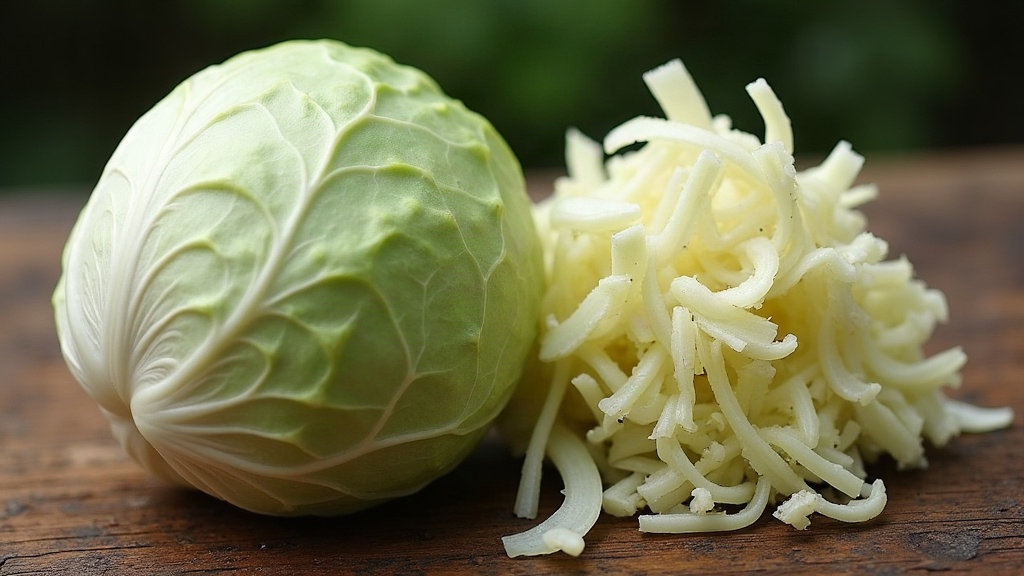
Fermenting whole cabbage heads and fermenting shredded sauerkraut are two completely different projects. They need different brine ratios, different timelines, and different troubleshooting instincts. Most beginner disasters happen because people assume one method’s rules apply to the other. They don’t. Here’s a rundown of the mistakes I see most often with each approach, and how to sidestep them.
Why Whole Heads and Shredded Kraut Aren’t the Same Project
Shredded sauerkraut works because you’re physically wrecking the cabbage’s cell structure. Cut or pound it into thin strips and you rupture the cell walls, releasing juice that combines with salt to form its own brine through osmosis. Whole or quartered heads are different animals entirely. Most of their cells stay intact, so they simply don’t release enough liquid on their own to cover themselves. That one difference cascades into nearly every decision you make afterward, from salt amounts to how long you wait before tasting.
Mistake #1: Using the Same Salt Ratio for Both
I’ve watched plenty of beginners grab a standard 2% salt-to-weight ratio, the one that works great for shredded kraut, and apply that same math to a batch of whole heads. The problem? Whole heads need an external brine solution poured over them, since they won’t generate their own juice no matter how long you wait.
- Shredded sauerkraut: 1.5–2.5% salt by weight of cabbage, massaged until liquid pools in the bowl.
- Whole/quartered heads: typically fermented in a 3.5–5% salt brine (by weight of water), poured over the heads until they’re fully submerged.
Use a shredded-kraut salt percentage on a whole-head batch and you’ll likely end up with dangerously low salinity. The result is often mushy, slimy, and smelling of something you don’t want on your plate.
Mistake #2: Not Accounting for Submersion Difficulty
Shredded cabbage compacts down easily and stays under brine with nothing more than a simple weight on top. Whole heads are a different story: bulky, buoyant, riddled with trapped air pockets between the leaves. Keeping them submerged is genuinely tricky, and it catches almost every first-timer off guard.
Fixes:
- Core the cabbage before fermenting so brine can reach the center instead of pooling uselessly around the outside.
- Quarter large heads rather than leaving them whole. A full head of Napa or green cabbage is a nightmare to keep underwater compared to a half or a quarter.
- Use a heavy, well-fitted weight, or a water-filled bag pressed firmly onto the cabbage.
- Plan on “burping” the jar or pushing the cabbage back down daily for the first week. Trapped air will keep trying to float it to the surface, and it will win if you let it.
Mistake #3: Expecting the Same Fermentation Time
Shredded sauerkraut moves fast, usually finishing somewhere between 1 and 4 weeks at room temperature, because the brine and the bacteria have so much surface area to work with. Whole heads crawl along at a much slower pace, often needing 4 to 8 weeks (sometimes longer), since the brine has to work its way through dense, unbroken leaves one layer at a time.
Pulling a whole-head ferment too early is probably the single most common rookie mistake. The outer leaves might already taste pleasantly tangy while the core is still raw, crunchy, and bland as cardboard.
Mistake #4: Ignoring Air Pockets and Trapped Gas
In shredded kraut, CO2 bubbles up and escapes without much trouble through all those loose shreds. Whole heads are a different matter: gas gets trapped between tightly layered leaves, and that leads to problems like:
- Bloating or ballooning of the cabbage
- Soft, mushy spots where gas pressure has built up
- Uneven fermentation, with some leaves tangy and others still essentially raw
Fix: Gently separate the leaves or pierce them slightly, or cut an X into the core and base of each quarter. This gives brine and gas a clear path to move through instead of fighting each other.
Mistake #5: Wrong Container Choice
A lot of beginners try to shove whole heads into a tall, narrow crock, the kind built for shredded kraut, and wonder why things go wrong. There’s just no room left for brine to move around properly.
- Shredded kraut: tall, narrow crocks are fine since the cabbage compacts down densely and uniformly.
- Whole/quartered heads: go wider and shorter (a broad crock or a food-grade bucket works well). The extra room lets the cabbage stay submerged without stacking pieces on top of each other awkwardly.
Mistake #6: Skipping Daily Checks Early On
Whole-head ferments are slower and bulkier, which means more surface area where air pockets and mold can sneak in. Check the brine level and the surface condition daily for that first week, then back off to every few days once things stabilize. Shredded kraut is more forgiving here. Once it’s packed down and weighted properly, it tends to sit quietly under its own brine without much drama.
Quick Comparison Table
| Factor | Shredded Sauerkraut | Whole/Quartered Heads |
|---|---|---|
| Brine source | Self-produced (massaged) | External brine poured in |
| Salt ratio | 1.5–2.5% of cabbage weight | 3.5–5% of water weight |
| Fermentation time | 1–4 weeks | 4–8+ weeks |
| Submersion difficulty | Easy | Hard (air pockets) |
| Best container | Narrow crock | Wide crock/bucket |
Final Thoughts
The real beginner mistake isn’t about salt or timing specifically. It’s assuming one method’s playbook works for the other. Shredded sauerkraut brines itself, moves fast, and forgives a lot of small errors along the way. Whole-head fermentation asks for more: an external brine, real patience, and constant attention to submersion and trapped gas. Treat them as the two distinct techniques they actually are, adjust your salt ratios, your timeline, and your equipment accordingly, and both methods turn reliable. No more wasted cabbage sitting in a bucket of regret.