Rubbery Mother in Homemade Vinegar: What It Means & Is It Safe?
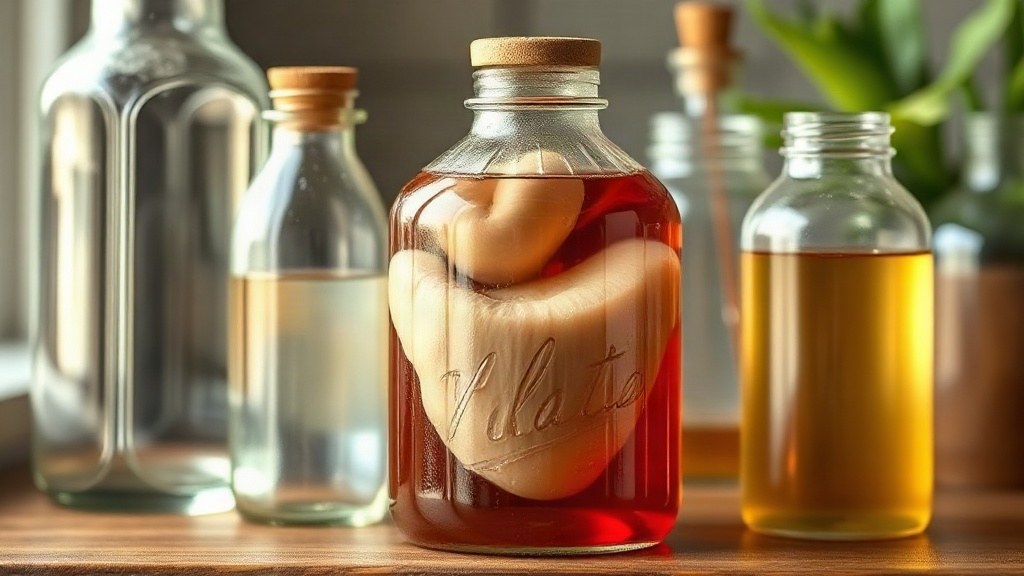
If your homemade vinegar has sprouted a slimy, rubbery, pancake-like disk on top, take a breath. That’s a “mother of vinegar,” and nine times out of ten it’s a perfectly normal byproduct of fermentation, not a warning sign that something’s gone wrong.
What Exactly Is a Vinegar Mother?
A mother of vinegar is a gelatinous biofilm, made up mostly of cellulose and acetic acid bacteria (mainly Acetobacter species). As these bacteria munch through alcohol and turn it into acetic acid, they spin out a cellulose matrix to anchor themselves right at the surface of the liquid, where oxygen is easiest to reach. That matters because acetic acid bacteria are aerobic. No air, no job done.
It can show up looking like:
- A translucent, jelly-like sheet
- A thick, rubbery disk that resembles a pancake or a thin SCOBY
- Brownish, stringy strands floating in the liquid
- Multiple stacked layers if the batch has been fermenting a while
This is, more or less, the same culture people use to kick off fresh batches of vinegar. That’s the whole reason it’s called a “mother” in the first place.
Why Did It Form in Your Batch?
A mother shows up when the conditions line up just right for acetic acid bacteria:
- Oxygen exposure — vinegar-making needs an open or breathable container (cheesecloth over the jar, never a sealed lid).
- Alcohol in the mix — whether it came from wine, hard cider, or a homemade sugar-water-and-fruit starter, alcohol is the fuel acetic bacteria convert into acid.
- Warm, steady temperature — mothers tend to form fastest somewhere between 60 and 85°F (15 to 29°C).
- Time — expect one to four weeks before a mother appears, depending on warmth and acidity level.
If you kicked off your batch with raw, unfiltered vinegar (which already carries bacterial culture) or leftover wine or cider left open to air, a mother forming is basically confirmation that fermentation is doing exactly what it’s supposed to.
Is It Safe to Eat or Keep Using the Vinegar?
Yes, almost always. A vinegar mother isn’t dangerous, and the liquid underneath it is still perfectly usable. Here’s what tells you everything is on track:
- The liquid smells sharply sour, the way vinegar is supposed to smell
- No fuzzy, colored mold (green, black, pink, or orange)
- No foul, rotten, or sulfur-like smell
- The mother feels rubbery and gelatinous, never fuzzy or powdery
From there, you’ve got options:
- Strain it out using cheesecloth or a fine sieve before bottling
- Leave it in since plenty of people keep the mother in the jar to keep fermentation ticking along
- Save it for your next batch, just drop it into a fresh mix of alcohol-containing liquid and water
When Should You Be Concerned?
Toss the batch if you spot any of the following:
- Fuzzy mold, in green, black, or pink. True mold is fuzzy or powdery, nothing like the smooth, rubbery texture of a mother.
- A foul or rotten smell in place of that familiar vinegar tang
- Pests, like fruit fly larvae, which tend to show up when the jar wasn’t covered properly
- Slime paired with an off, ammonia-like odor
One rule of thumb worth remembering: a real vinegar mother is never fuzzy. See fuzz, and you’re looking at mold. Dump the batch.
Tips to Manage a Growing Mother
- Trim it down: once it gets too thick, snip off a chunk with clean scissors. Compost it, or use it to launch a new batch.
- Let it float or sink, doesn’t matter: no need to remove it unless it’s choking off airflow.
- Go with a wide-mouth jar: gives the mother room to spread out instead of crowding itself.
- Cover loosely: a breathable cloth or coffee filter held on with a rubber band lets air in while keeping fruit flies and dust out.
Common Questions
Can I drink vinegar with the mother still in it? Sure, plenty of people do, especially with raw, unfiltered apple cider vinegar. Many treat it as a sign the product is alive and probiotic-rich.
Does the mother add nutritional value? It holds beneficial bacteria and a few trace nutrients, but the bulk of the acetic acid and flavor is already dissolved in the liquid itself.
Will removing the mother stop fermentation? Not really. Acetic acid bacteria are floating around in the liquid too, so fermentation keeps going even after the visible mother is gone.
Final Takeaway
A rubbery mother in your homemade vinegar is a normal, expected stage of fermentation. If anything, it’s proof the batch is alive and doing exactly what it should. As long as there’s no fuzzy mold and no foul smell, go ahead and strain, bottle, and use it with confidence. Keep watching for real spoilage signs, give the jar decent airflow, and maybe set aside a piece of that mother to jump-start your next batch.