Lacto-Fermented vs Salt-Brined vs Quick-Pickled Radishes: Crunch Test
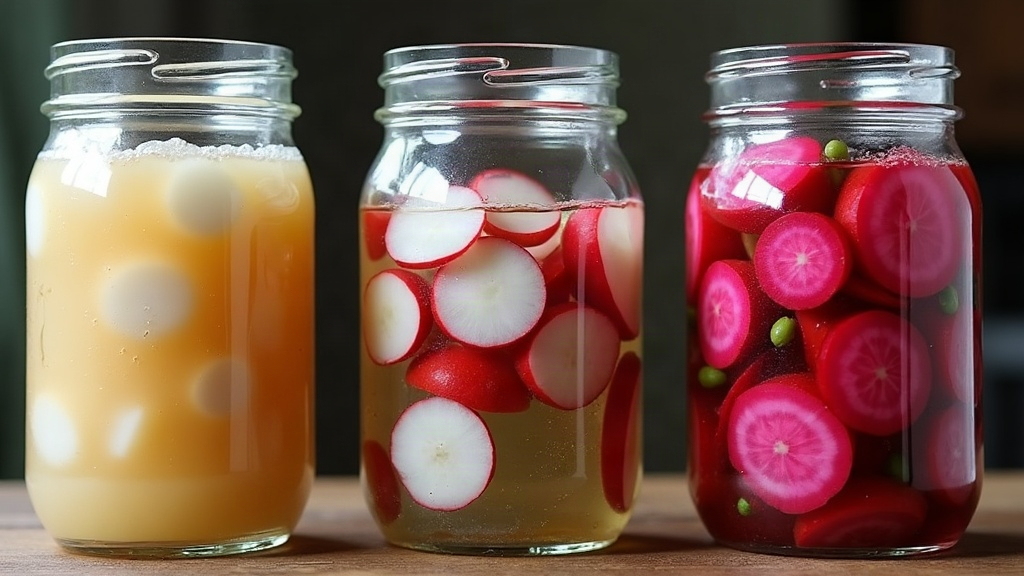
If you want radishes that stay genuinely crisp for weeks, salt-brined radishes win on crunch. Lacto-fermented ones come close, with a flavor that’s honestly more interesting, and quick-pickled (vinegar) radishes are only crunchy for the first few days before they go soft. Which method you pick really comes down to one question: how long do you need that crunch to last, and how much flavor complexity are you after?
Why Crunch Disappears in the First Place
Radish crispness comes down to cell wall structure and water content. Any brine or acid solution pulls moisture out of the cells through osmosis, and as time passes, the pectin holding those cell walls together starts to break down. A few variables matter more than the rest:
- Salt concentration – more salt firms the cells faster and slows down microbial softening.
- Acid strength – vinegar denatures pectin enzymes fast, which helps in the short term but works against you later on.
- Temperature – cold storage (fridge or a cool cellar) slows the breakdown dramatically. Leave a jar on the counter and you’ll notice the difference within days.
- Fermentation time – the longer the ferment runs, the more acid and CO2 activity builds up, and that gradually softens the tissue.
Method 1: Lacto-Fermented Radishes
Lacto-fermentation relies on a 2-3% salt brine and the naturally occurring lactobacillus bacteria already living on the radish skin. Over 3 to 10 days at room temperature, those bacteria convert sugars into lactic acid. After that, the jar moves to cold storage.
Crunch verdict: Good for 3-4 weeks refrigerated, then it softens gradually.
- The flavor is tangy, a little funky, genuinely complex. Think closer to a sour deli pickle than anything you’d get from vinegar.
- Toss in a grape leaf, an oak leaf, or even a black tea bag (tannins do the work here) and you’ll notice better crunch retention, since tannins inhibit the pectinase enzymes responsible for softening.
- Keep the radishes fully submerged. The moment they’re exposed to air, mold risk goes up and the whole batch degrades faster.
- Thin-skinned varieties like French Breakfast ferment quicker and soften sooner. Daikon and watermelon radish hold their structure much longer, so they’re a better bet if you’re planning to keep a jar around for a month.
Method 2: Salt-Brined Radishes (Non-Fermented, Refrigerator Style)
This one’s simpler: a high-salt or salt-and-vinegar brine, mixed fresh and poured straight over the radishes, then refrigerated with no fermentation step. It’s basically a Japanese-style asazuke, or just a classic refrigerator pickle.
Crunch verdict: The crunchiest option on this list, holding firm texture for 4-6 weeks in the fridge.
- Salt plus cold does the heavy lifting here. Cell walls firm up without any of the softening side effects you get from active fermentation (less gas, less enzymatic breakdown).
- Flavor is cleaner and sharper. Salty, mildly tangy, no funk at all.
- An old trick worth using: salt the sliced radishes directly, let them sit 15-20 minutes to pull out excess water, rinse briefly, then pour on the brine. Pre-draining moisture this way keeps the final texture denser and snappier.
- If you want pickle flavor without that fermented edge, this is your method.
Method 3: Quick-Pickled Radishes (Vinegar Pickle)
Quick pickles use a hot or room-temperature brine of vinegar, water, sugar, and salt, poured directly over raw radish slices. Ready to eat in 30 minutes, sometimes less.
Crunch verdict: Crunchiest on day one, but that fades fast. By day 5-7, you’ll notice a clear softening.
- Vinegar’s acidity starts breaking down pectin almost on contact. That’s exactly why these pickles taste crisp right out of the jar but lose their snap within a week.
- A couple of small tweaks help: use a cold brine instead of a hot one, and slice the radishes a bit thicker (1/8 inch or more). Either change buys you a few extra days of crunch.
- These are built for radishes you’ll eat fast, tacos, banh mi, salad toppings, not something you’re stashing away for a month.
Side-by-Side Comparison
| Method | Peak Crunch Window | Flavor Profile | Shelf Life |
|---|---|---|---|
| Lacto-fermented | Days 3-21 | Tangy, complex, funky | 4-8 weeks refrigerated |
| Salt-brined | Days 1-35 | Clean, salty, mild tang | 4-6 weeks refrigerated |
| Quick-pickled | Hours 1-72 | Sharp, vinegary, sweet-tart | 1-2 weeks |
Practical Tips to Maximize Crunch in Any Method
- Start with the freshest radishes you can find. A bunch from Saturday’s farmers market will crisp up noticeably better than something that’s been sitting in a supermarket bin for a week.
- Chill your brine before pouring, unless you’re actively fermenting. Heat speeds up softening more than people expect.
- Trim off the blossom end. It carries enzymes that encourage spoilage and mushiness.
- Keep jars in the coldest part of the fridge, not the door. Door temperatures swing every time it opens, and that fluctuation works against you.
Conclusion
For crunch that lasts the longest, go with salt-brined radishes. They’re simple, the flavor stays clean, and nothing else on this list holds its texture as well over time. Want something more complex, with that probiotic tang, and you don’t mind giving up a little crunch further down the line? Lacto-fermentation is the better call. Quick-pickled radishes are great for right now, bold flavor in half an hour, but they won’t make it much past a week before softening. Pick the method that matches your timeline, and you’ll never bite into a mushy radish again.