Lacto-Fermented vs Vinegar-Pickled Green Beans Compared
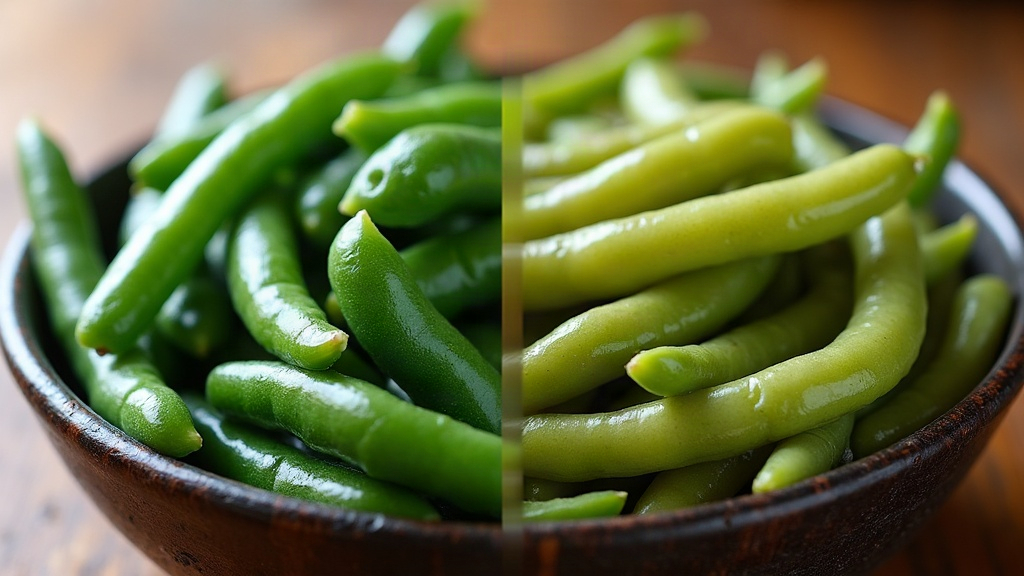
If you’ve ever bitten into a jar of “dilly beans” and wondered why one batch tasted sharp and vinegary while another was tangy, funky, and almost fizzy, the answer comes down to method. Lacto-fermentation versus vinegar pickling. Both preserve green beans, both deliver a satisfying crunch, but they get there through completely different chemistry. And which one you pick really depends on what you want out of the jar: probiotic complexity, or bright, consistent tang.
The Core Difference: Chemistry, Not Just Taste
Vinegar pickling works by submerging beans in an acidic brine (usually 5% acetic acid vinegar, water, salt, and spices) and either processing the jars in a water bath or just refrigerating them. The acid does the preserving work right away. No waiting around for bacteria to show up and do anything.
Lacto-fermentation, on the other hand, relies on the naturally occurring Lactobacillus bacteria already living on the beans. Submerged in a simple saltwater brine (typically 3-5% salinity) at room temperature, these bacteria slowly convert sugars into lactic acid over 5 to 14 days. That process both preserves the beans and builds their signature sour flavor.
Texture Comparison
- Vinegar-pickled beans tend to stay firmer and crisper for longer, especially with a quick pickle or refrigerator method rather than hot processing. Water bath canning does soften beans a bit, simply because of the prolonged heat.
- Lacto-fermented beans develop a slightly different kind of crunch, one I’d call “snappier,” with a bit of give before you hit the crisp bite. Since there’s no heat involved, the raw cell structure stays more intact. That said, the beans can go soft faster in storage if fermentation runs too long or the brine’s too weak.
Winner for pure crunch: Refrigerator vinegar pickles, especially with a calcium chloride additive or a grape or oak leaf tucked into the jar (an old trick that uses natural tannins to firm up pectin).
Flavor Comparison
- Vinegar-pickled green beans taste bright, sharp, immediately sour. The flavor is consistent, jar after jar, batch after batch. Dill, garlic, and red pepper flakes are classic add-ins that play nicely with vinegar’s clean acidity.
- Lacto-fermented green beans are more layered: tangy, but rounder, with a subtle funk, a faint fizz, and an umami depth that builds as fermentation goes on. No two batches taste quite the same, which is honestly half the appeal if you’re into fermenting.
Want predictable, punchy sourness? Go vinegar. Prefer nuanced, evolving flavor with a slight probiotic edge? Ferment.
Nutrition and Gut Health
This is where lacto-fermentation pulls ahead, no contest. The fermentation process generates live beneficial bacteria, the same kind you’d find in sauerkraut or kimchi, which may support gut health when the beans are eaten raw (unpasteurized) and kept cold. Vinegar pickling offers zero probiotic benefit; it’s purely a preservation method. It does, however, hold onto most of the beans’ original vitamin content, since there’s no fermentation breakdown eating into nutrients.
Shelf Life and Storage
| Factor | Vinegar-Pickled | Lacto-Fermented |
|---|---|---|
| Room temp storage | Yes, if canned (water bath) | No, needs refrigeration after fermenting |
| Shelf-stable years | 1-2 years (canned) | Not shelf-stable; best within 4-6 months refrigerated |
| Prep time | 24 hours to 2 weeks (canned vs quick pickle) | 5-14 days active fermentation |
| Skill level | Beginner-friendly | Requires monitoring for mold/scum |
Which Method Should You Choose?
- Choose vinegar pickling if you want something fast, foolproof, and shelf-stable, whether that’s for gifting or stocking the pantry, or if you’re just starting out with preserving.
- Choose lacto-fermentation if you’re chasing gut-health benefits and deeper flavor, and you don’t mind refrigerating the finished jars and checking in on the process along the way.
Plenty of home preservers just do both: a quick batch of vinegar dilly beans for the pantry shelf, plus a ferment crock bubbling away for weekly snacking.
Conclusion
Lacto-fermented and vinegar-pickled green beans aren’t really rival recipes. They’re two different preservation philosophies, one chemical, one biological. Vinegar gives you speed, consistency, and shelf stability with a bright, sharp bite. Fermentation gives you probiotic richness, deeper flavor, and a satisfying snap, at the cost of fridge space and a bit more attention. Try both with the same batch of fresh beans, side by side, and you’ll know pretty quickly which one fits your kitchen, and your taste buds, best.